Data: it’s what’s on your plate for breakfast, lunch, and dinner — that is, if you want to make sure that your organization is chock full of good insight to work with. Nowadays, digital insights allow us to understand our audiences better than ever before. Of course, gathering and making sense of all that data is easier said than done. As more and more avenues of influence surface on a daily basis, monitoring and measuring your marketing effectiveness is more critical than ever.
Data — dare I say “big data” — has become so valuable across organizations that there is now a mob of stakeholders vested in getting the data they need in the right format. Do it right, and they lift you onto their shoulders. Mess it up, and they may just pull out the pitchforks.
So how do you unify data while simultaneously enabling complex reporting by specific need? It’s a huge challenge with all the departmental factors you must coordinate:
- Marketing wants: streamlined visibility of a single view of each customer, plus aggregated views of all customer data.
- IT wants: control over what fields are required and what fields flow into which
- Ops and/or IT wants: control over what fields should be locked (unedited once submitted) and what can be changed by anyone.
- Sales wants: the right to enter data freely into your CRM, while requiring certain data fields to be filled out in order to route to the correct reps or regions.
- Service wants: the ability to easily update customer information — activity that in turn enable sales and marketing teams to personalize efforts, or identify opportunity for upsell/cross-sell.
The bottom line is that marketers are critically tasked with data in their courts. In the spirit of the season and the “spring cleaning” it inspires, here are three strategies to help you get things better organized and make your database a more effective hub for the entire organization (now, if only cleaning out the attic was this simple!):
- Standardize Data
Also known as a Contact Washing Machine (CWM). You can’t make good apple pie with a random array of fruits and vegetables. Standardization is a primary and indispensable step to increasing customer engagement. To create a universal way to standardize data, you must creatively consider every possible way in which something could be entered, and then make sure that your database management system has some logic built in to rank the most “accurate” contacts, and sequester the others. For most fields, you can force standardization by employing pick lists of previously identified and agreed-upon fields, such as country/region, industry, lead source (original or most recent), key demographics, campaign focus, and so forth. With standardized data, you can successfully move a prospect down the pipeline by averting the risk of losing activity associated with duplicate contacts.
- De-duplicates
If only it was as simple as sorting alphabetically by name! Unfortunately, lead, contact, and company duplication most often occurs around fields like title (Director or Dir.), company (Inc., Incorporated, or blank; United Parcel Service or UPS), or email address (company or web-based personal email). The danger with duplicates is losing record of sales activity and marketing engagement that may not be associated with the same contacts. Marketers must make it everyone’s responsibility for driving clean and consistent data; drive consistent customer data fields, whether it's from the sales team entry or marketing form-fills.
- Embed Data Quality
Build in as many audit processes as possible. Consistently review all active web forms and landing pages. This accomplishes most of what “fast find” data is needed to route the prospect to the proper resource. Bring this about through auto-population from existing database info or using a third party in the form to do an auto-lookup and population. Also, mandate across your organization 100% data population of key fields — whether it's function, company size, or email address. More complete data increases your velocity through the journey. If those in your CRM cannot provide key fields, have a back-up plan to enrich your contacts.
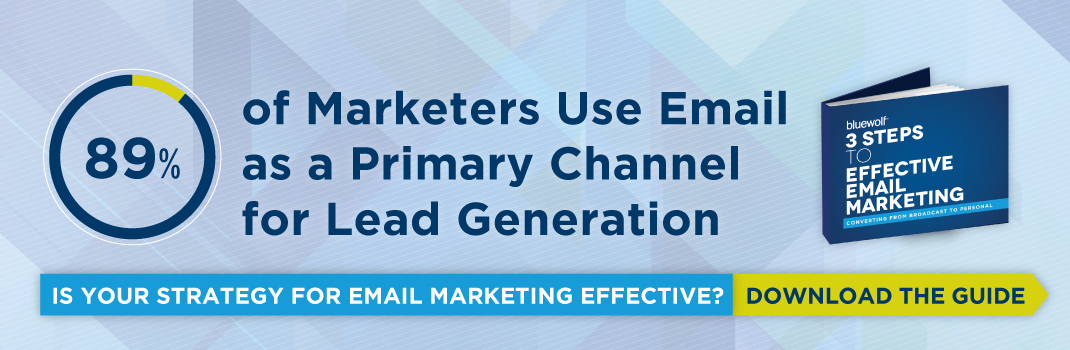
Now that you’re geared up with strategies to clean up your data, ramp up relevant communications with right time contact information. Check out the guide, 3 Steps to Effective Email Marketing, to learn key strategies to increase database engagement.
Guest Blogger: Jonathan Reimer is responsible for conceptualizing, creating, and managing global demand generation programs and campaigns for a leading provider of marketing automation solutions within the Oracle Marketing Cloud.