November 20, 2013
With over 500 marketers in the audience, Corinne Sklar, Bluewolf CMO, kicked off the session with a bold statement; “With my eighth year of coming to Dreamforce, Marketers have never had a seat at the table. But this gathering of Marketers proves that the roles have shifted and things have changed.”
Salesforce is no longer solely a CRM tool. Salesforce is a platform that all departments are leveraging to gain insight into their customers. With Sales, Service, and Marketing all under one roof (see Salesforce1 announcement), the transparency and alignment between departments is greater than ever before. However, no matter how cohesive or multidimensional your solution is, there remains a tension between Sales and Marketing.
How are marketers maximizing the basic functionalities of salesforce.com? Bluewolf’s Corinne Sklar, Jolene Chan, Nicholas Loek, and Lee Davis teamed up to provide the following tips:
Tip #1: Contact Roles
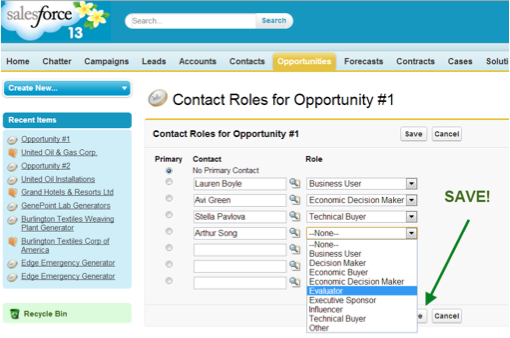
Corinne asked the audience, who uses contact roles currently? And only five people raised their hand. This was a shock! Contact Roles are the only essential way to differentiate your marketing efforts towards closed/won customers, someone in pipeline and a prospect.
Create opportunities from the contact role
Make this a must. It will be better customer engagement for both Sales and Marketing. Opportunities do not come about without a discussion with a person. Hold Sales accountable to document who they are engaged with during these sales cycles. Do not allow opportunities to be created on the Account level. Opportunities must be created from the contact level to drive trackability. Incentive Sales to want to add contact roles.
Quid pro quo: marketing to active pipeline
When enforcing contact roles, help Sales understand their WIIFM (what’s in it for me) for adopting these habits. If contact roles are rightfully used, marketing can then better target their database and better address hot open opportunities in their marketing strategy.
Tip #2: Treat Your Contacts Like You Treat Your Leads
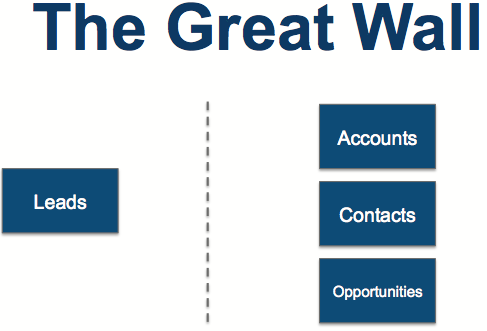
Once a lead is converted in Salesforce it can easily get lost in the shuffle. Who are your contacts? They may be old customers, lost opportunities, customers you can upsell, or just simply orphans that were were forgotten about.
Lead scoring is for contacts too
Lead scoring should not be called lead scoring, this is deceiving. Engagement and conversation should increase after conversion. It is crucial to continue to track your contacts’ engagement. Scoring all of your database will help sales identify when is the right time to become reengaged or upsell.
Nurture your contacts based on their own journey
As you track their engagement, be should to nurture them through educational programs about your product and services, that are relevant to their needs. Take into account their persona, industry, and past interactions with your brand, just to name a few.
Re-engage your contacts at the right time
As your track engagement and nurture them through educational programs, you then have greater insight into how and when to re-engage customers.
Tip #3: Take Data Seriously—Create Data Governance
Enrich data with social sign-on & progressive profiling
No one wants to fill out a form with 20 fields. Be smart in your marketing and don’t discourage leads from engaging with you. By using social sign-on and progressive profiling you can smartly add to your data and profile of your database. Your lead and contacts should never have to fill out the same field more than once when on your site.
Enrich data with 3rd party apps
Data is not sexy, but it’s extremely important. It is at the heart of engagement. Without accurate data you can not accurately market. Data is continuously added to your database, but how do you identify what the most up-to-date? Explore the Salesforce AppExchange for append, cleansing, and enrichment tools.
Create a data governance plan & dashboard
As marketers, we are focused on ‘form data’. A form is the way we communicate with our customers and prospects. But don’t ignore the data continuously being added by salespeople. Training Sales on best practices and holding them accountable to providing good data. Find the WIIFM for Sales to drive good data habits. With data governance both Sales and Marketing will finally have a clear and accurate 360 view of their customers.
Bonus Tip: Throw SLA Out The Window
SLA is the agreement that is set in place between Sales and Marketing. Throw this out the window and drive customer engagement from the outside-in.
Build a new demand funnel based on outside-in approach
Have your Sales and Marketing teams ever truly agreed on the definition of a qualified lead? Approach your customer from the outside-in with a clear vision of their needs, profile, and past engaged. Breakdown the departmental silos to better engage customers.
To see how you can design and implement a modern, digital marketing strategy, download our free guide.