March 31, 2015
This month, we are showcasing how lead scoring has improved our sales and marketing efforts. We'll also provide tactical steps to launch and optimize lead scoring in your organization.
Bluewolf’s lead scoring program has increased sales productivity by bringing the hottest leads to the forefront, and has increased marketing ROI in the campaigns that matter most. This program is updated regularly to align with our focus.
Here are four steps to build and optimize lead scoring.
Step 1: Align Sales and Marketing.
We know Sales and Marketing alignment is a persistent challenge for many organizations, but it's absolutely critical — without achieving this, all of your efforts could go to waste. Sales and Marketing stakeholders must meet and define the objectives of the project. Sales follow-up should align with the scoring process. Address the following questions:
- Who is your buyer?
- How will the Sales team’s day-to-day efforts be affected by lead scoring?
- How will we track activities and handle accountability for these activities?
- Who will communicate these changes to the teams involved?
- How can we incorporate feedback into the model?
Step 2: Understand your buyer.
To effectively flag your hottest leads, you must first understand who is buying your product or service. It is important to dig into the data before making any assumptions.
Your buyer can be defined by two types of data points: profile data (contact and company attributes) and engagement data (contact and company actions). To understand your buyer’s profile data, run reports to find out who is buying your product: What is their role at their company? Are there commonalities — industry, number of employees, geographical location — in the companies you are selling to?
To understand your buyer’s engagement data, find out if these they are attending your events, visiting specific pages on your website, responding to certain types of campaigns, or submitting specific forms.
Once you’ve defined your buyer profile, you can build out your model. If your company has multiple buyers or products, consider building a scoring model for each.
Step 3: Assign weighting based on buyer profile.
Now that you have a firm grasp of your buyer’s profile data and engagement actions, you can define your scoring model. Start with two to four profile fields and engagement types. The more rules you put in place, the more complicated it is to understand your results and make updates. The chart below gives guidance on assigning weighting to your criteria:
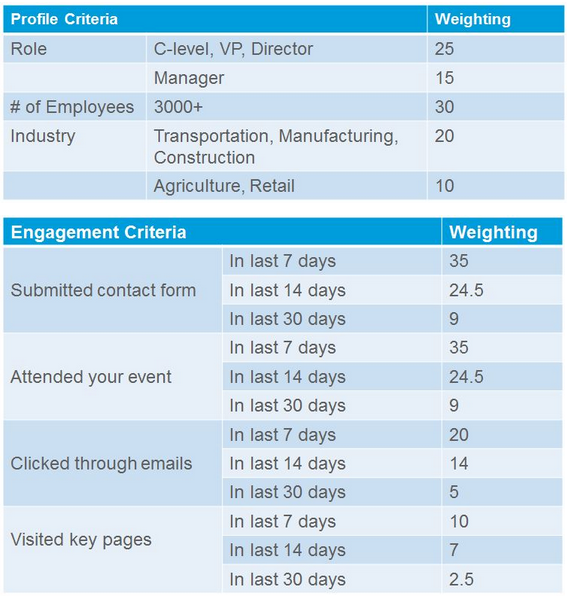
In this example, the most common target buyer is a C-level, VP, or Director at a company with at least 3000 employees in the Transportation, Manufacturing, or Construction industries. Common activities include submitting a contact form on the website, attending your events, clicking through your emails and visiting pages you have deemed important on your website.
Now that your lead scoring program has been defined and built, it’s time to turn it on and put it to use!
Step 4: Read your results and iterate.
It’s important to regularly evaluate and update your lead scoring program to ensure you’re getting maximum value from it. Your sales organizer should provide qualitative feedback, which you should welcome, as they are the ones following up on your efforts! Glean quantitative data by watching your leads travel through the funnel. Establish a cadence for revisiting your scoring criteria on — any change in focus for the company should be reflected in your model.
We hope this blog has provided you with some great tips on how to build or optimize your lead scoring program. Catch up on all the blogs in the series, and subscribe to receive new installments directly in your inbox!
How is lead scoring impacting your sales and marketing efforts? Let us know in the comments below, or tweet us @Bluewolf.


